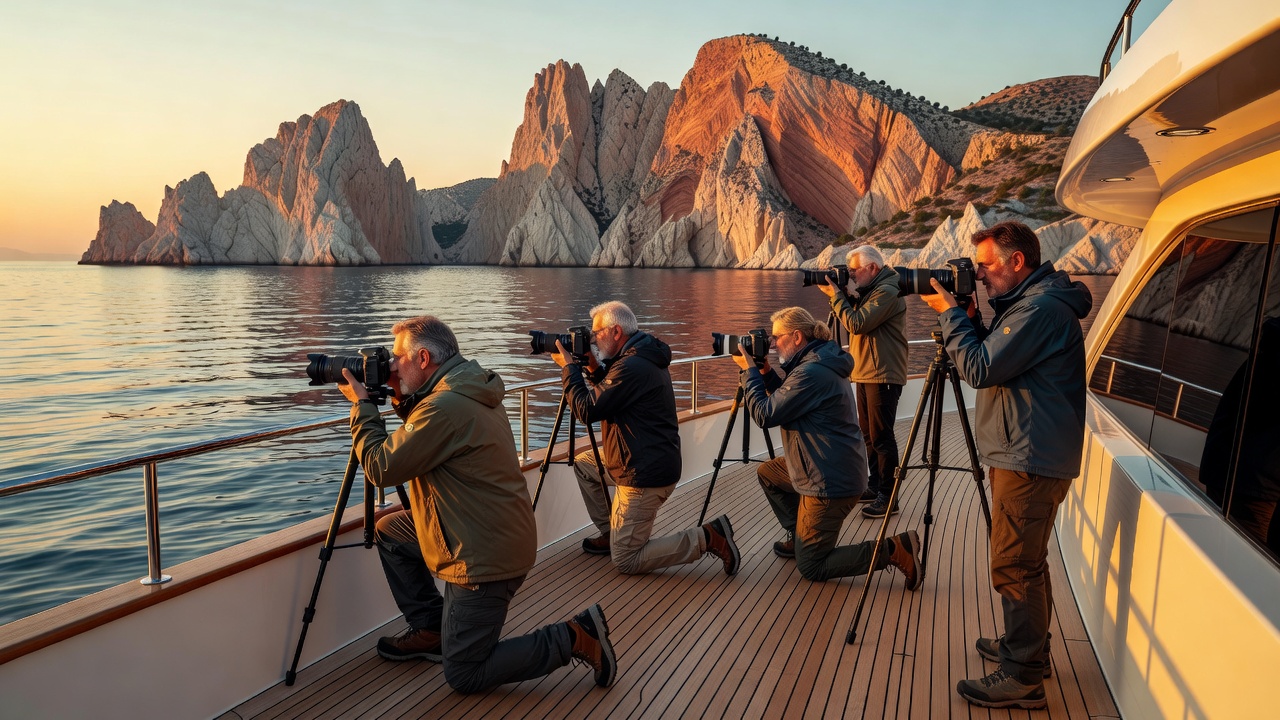
Most yacht itineraries are built around passages, harbours and restaurants. A photography expedition reverses the order. It starts with a handful of images you hope to make — a chalk arch at sunset, a lighthouse at twilight, a cove in still morning water — and works backward to the days, weather and anchorages that might allow them. The skill lies in holding that wish list loosely, because the sea will edit it for you.
Two lists, kept apart
We recommend keeping two separate lists. The first is the inspiration list: subjects, directions of light, preferred times. The second is the access list, which belongs to the skipper: harbours, anchorages, protected zones, weather limits and fallback options. The two lists meet every evening in the cockpit. When they agree, you shoot. When they don't, the access list wins, and the inspiration list waits for another day or another trip.
Choosing season and region
Season shapes both light and access. The Mediterranean's settled summers bring reliable sunsets but harsh midday light, haze and crowded anchorages; late spring and early autumn often give clearer air and lower sun. Atlantic coasts such as Brittany, Cornwall and the west of Ireland offer dramatic skies and lighthouses but more changeable weather. The Dalmatian islands, Corsica and Sardinia, the Balearics and the Algarve are all popular for combining reachable anchorages with strong coastal subjects.
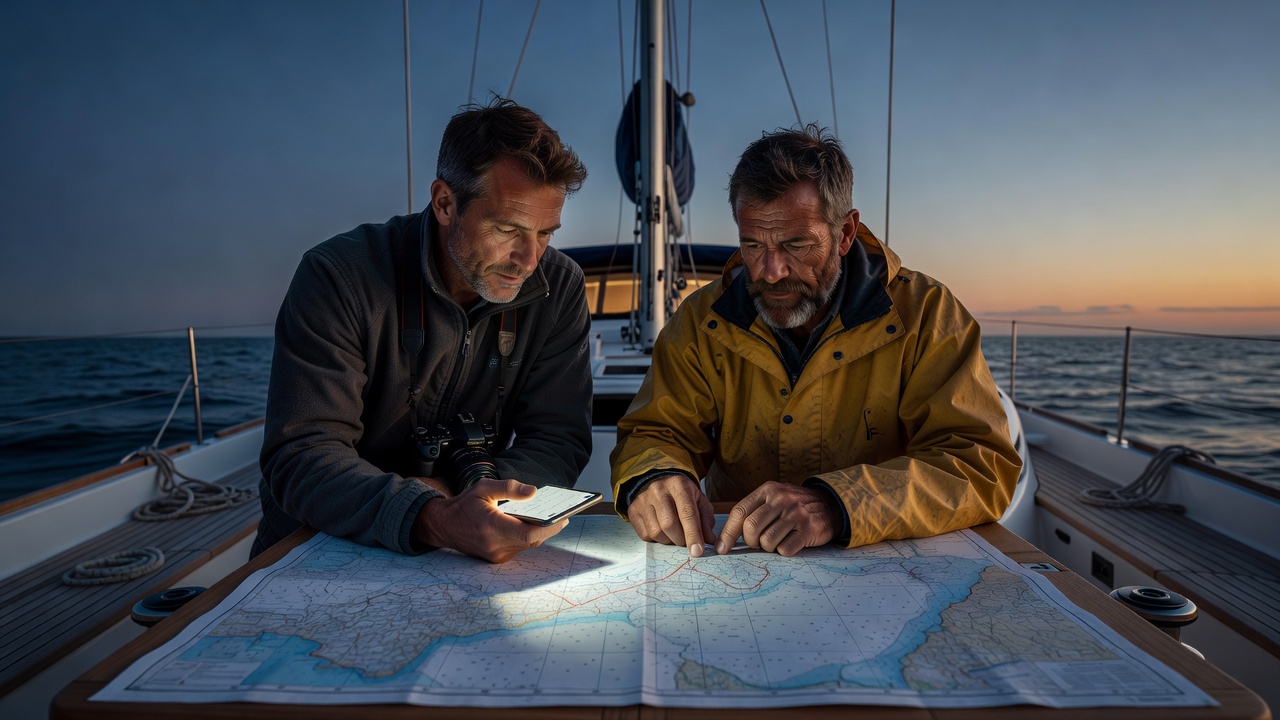
Tools for light and for passage
Light-planning apps such as The Photographer's Ephemeris and PhotoPills show where the sun and moon will rise and set relative to any point on a map — invaluable for knowing whether a sunset will fall behind a headland or into open sea. They answer the inspiration question only. Passage and anchorage decisions draw on official charts such as Admiralty or national hydrographic charts, pilot books from publishers like Imray, almanacs such as Reeds, notices to mariners and local forecasts. Keep the two toolsets distinct in your head.
Charter types for photographers
A skippered charter is often the best fit: you focus on images while a professional makes the seamanship calls and knows local rules. Bareboat charter suits photographers who are also qualified, experienced sailors, though combining both roles is tiring. Small-group photography voyages run by specialist operators bring shared interest and an itinerary designed around light. Whatever the format, tell the skipper about photography goals before departure, not halfway through the week.
The best sunset anchorage is the one where everyone sleeps well afterwards.
— A skipper's advice, Hvar
Finding sunset anchorages
A good sunset anchorage, photographically, has an open western horizon, an interesting foreground or skyline, and shelter from the night's expected wind. That last condition is decisive and only the skipper, with the forecast, can judge it. Places frequently praised by photographers include the Pakleni islands off Hvar, the western bays of Ibiza and the Îles d'Hyères off Porquerolles — but each depends on wind direction on the day, and many have mooring buoys, fees or seasonal limits.
Protected seabeds and quiet water
In the Mediterranean, Posidonia seagrass meadows are protected in many regions, with anchoring restricted to sandy patches or designated buoys. Marine parks such as La Maddalena in Sardinia or the Calanques near Marseille have zones with their own rules. Respecting them is part of the craft: the clear water you photograph in a cove exists partly because the seabed has been protected.
| Time | Photography | Boat |
|---|---|---|
| Dawn | East-facing cove from the tender | At anchor, skipper's approval for tender use |
| Morning | Scouting and edits | Passage to the next area |
| Midday | Rest, back up files | Lunch stop or sailing |
| Late afternoon | West-facing cliffs from offshore | Coastal sail at skipper's distance |
| Sunset | Stern shots of the last colour | Sheltered overnight anchorage |